
Expert Guidance
Study In Germany
Discover exceptional academic paths and global career options in Germany. Trans Globe provides complete, end-to-end assistance throughout your study abroad journey, ensuring a seamless relocation to one of Europe's leading nations.
Study in Germany
Discovering Academic Excellence in Germany
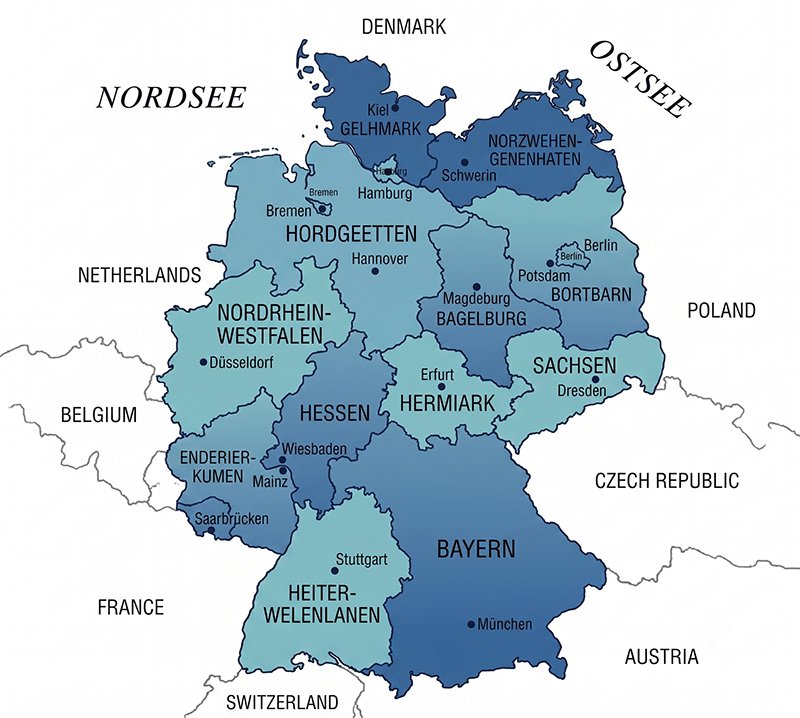
Known as a leading destination for international students, Germany offers high-quality, tuition-free education at its public universities. By combining rich academic traditions with modern technical innovation, the country attracts students from all over the world. A major benefit is that most public universities do not charge tuition fees, even for international students. In addition to being highly affordable, Germany is home to prestigious universities like the Technical University of Munich (TUM) and LMU Munich, which offer numerous courses taught in English. The higher education system in Germany is structured to let students choose between research-oriented universities and practical universities of applied sciences (Fachhochschulen). While tuition is free at public institutions, students need to cover their own living costs and semester fees. The semester fee, usually between €150 and €400, includes public transit passes and student union contributions. To obtain a student visa, you must show proof of financial funds by placing €11,904 in a blocked account for your first year. After graduation, students can apply for an 18-month job-seeker visa, giving them time to start their careers and travel freely across Schengen countries.
400+
Recognized Universities
Top Institutions
Renowned TU9 Technical Universities & Art Schools
18 Months
Stay-Back Visa Option
420,000+
Global Students Enrolled
Why Germany
Benefits of Higher Education in Germany
Achieve your academic goals in Germany, a country that offers world-class degrees with no tuition fees at state universities. International students enjoy a vibrant cultural scene and a wide selection of programs taught entirely in English. With reasonable living expenses and visa-free travel across the Schengen zone, Germany is an ideal place to study. Additionally, the country's strong economy provides excellent job opportunities, supported by an 18-month post-study work visa and pathways to long-term residency.
No Tuition Fees
Most public universities in Germany do not charge tuition to international students. You only need to pay a small semester fee, which makes studying there highly cost-effective.
Global Academic Prestige
German higher education institutions are world-famous for their research output and rigorous academic standards. A degree from Germany is highly valued by employers worldwide.
Courses Taught in English
You do not need to know German to study here, as there are thousands of bachelor's and master's programs taught completely in English for international students.
18-Month Stay-Back Option
After completing your studies, you can stay in the country for up to 18 months to find a suitable job, helping you build a successful career in Europe.
Reasonable Cost of Living
Living costs in Germany are affordable compared to other Western countries. Students also receive discounts on public transport, events, and daily activities.
Travel Across Europe
Your student visa allows you to travel freely through all Schengen countries, making it easy to explore different cultures during your university holidays.
The Journey
Your Roadmap to Studying in Germany
A comprehensive, step-by-step timeline guiding you from initial research to your arrival in Germany, supported by Trans Globe.
STEP 01
Evaluate Eligibility
Research programs 10 to 12 months in advance to ensure your qualifications meet German university criteria. If not directly eligible, you may need to complete a foundation course (Studienkolleg).
STEP 02
Language & Entry Exams
Prepare and sit for required language exams (IELTS, TOEFL, or TestDaF) about 9 to 10 months early. Some master's programs may also require specific entrance tests like the GRE or GMAT.
STEP 03
Apply for APS Verification
Students from certain countries (such as India) need to apply for APS certification 8 to 9 months before intake. This mandatory verification process takes about 4 to 8 weeks to complete.
STEP 04
Obtain VPD (uni-assist)
If your university requires it, apply for the Vorprüfungsdokumentation (VPD) through uni-assist 6 to 8 months ahead. Be sure to submit all academic transcripts and your APS certificate on time.
STEP 05
Submit Applications
Submit your applications via uni-assist or the university's portal 4 to 6 months before the semester starts. Include your VPD, transcripts, SOP, and reference letters.
STEP 06
Arrange Funds & Insurance
Once you get your admission offer (3 to 4 months out), set up your blocked account and deposit €11,904. You also need to purchase recognized German health insurance.
STEP 07
Apply for Student Visa
Book your visa appointment 1 to 3 months before your travel date. Bring your admission letter, APS certificate, blocked account proof, and health insurance to your interview.
STEP 08
Arrive & Enroll
After arriving in Germany, register your address (Anmeldung) and complete your university enrollment by paying the semester fee to receive your student ID and transit pass.
Required Documents
Valid Passport
A current passport and recent passport-style photos.
Academic Transcripts
Official transcripts and graduation certificates with certified translations.
Required Certificates
An APS certificate and uni-assist VPD (if required by your university).
Language Proof
Proof of English (IELTS/TOEFL) or German language proficiency.
Supporting Documents
An updated resume/CV, a Statement of Purpose (SOP), and Letters of Recommendation (LOR).
Financial Proof
Blocked account confirmation and test scores like GRE/GMAT if applicable.
Admission Steps
Program Research
Find courses and universities in Germany that fit your background, budget, and career goals.
Gathering Documents
Collect and verify all transcripts, test scores, passport copies, SOP, and CV.
Submitting Applications
Apply to your selected universities with the help of Trans Globe for a smooth process and fee waivers.
Application Review
Universities review your application. You may be asked to attend an online interview or submit a portfolio.
Receiving Offer
Get your official Letter of Admission and complete enrollment steps to secure your place.
German Student Visa Requirements
To successfully obtain your German student visa, you must satisfy the following four key requirements:
Proof of Admission
An official letter of admission from a recognized German university confirming your course details.
Proof of Funds
A blocked account with at least €11,904 to cover your first year's living expenses, or proof of a scholarship/sponsor.
Health Insurance
Recognized health insurance with at least €30,000 coverage for medical treatments and hospitalization in Europe.
Accommodation Proof
Proof of where you will live, such as a rental agreement, hostel booking, or a student dormitory contract.
PLAN YOUR BUDGET
Estimating Your Expenses
A well-planned budget is key to a successful study experience in Germany, letting you live comfortably while enjoying your studies.
Annual Tuition Fees
Public Universities: €300 to €800 Private Universities: €10,000 to €25,000+
Living Costs & Accommodation
€11,904 to €16,000
Estimated annual cost of living
Flight Ticket Cost
€400 to €1,200
Average cost depending on airline and booking date
Visa Fees
€75
Standard student visa fee (excluding small VFS processing charges).
FUTURE READY
Career Opportunities in Germany
Key sectors offering excellent job prospects and career growth for graduates.
Information Technology & Software Development
Engineering & Mechanical Industries
Healthcare & Life Sciences
Logistics & Supply Chain Management
WHEN TO APPLY
Admission Intakes in Germany
German universities admit international students twice a year for the Winter and Summer semesters. Applying early increases your chances of admission and visa approval.
September/October
Main IntakeWinter Semester (Starts Sep/Oct)
March/April
Secondary IntakeSummer Semester (Starts Mar/Apr)
EMPLOYMENT & RIGHTS
Post-Study Work & Career Growth
Build a stable career by joining Germany's strong job market. The country has a high demand for qualified professionals in engineering, IT, and healthcare. After graduating from a recognized university, you can apply for a post-study work visa to find employment. This visa provides a direct path to obtaining permanent residency or an EU Blue Card.
Part-Time Work
Up to 20 hours per week
Vacation Work
Full-time during holidays
Visa Validity
Valid for up to 18 months.
Eligible Programs
Bachelor's, Master's, and PhD degrees
Work & Stay Back
Understanding the Post-Study Work Visa
International graduates in Germany can benefit from an 18-month post-study work visa. This stay-back option allows you to work without restriction while looking for a job matching your qualifications. It is an excellent gateway to obtaining a permanent residence permit or an EU Blue Card. This visa is available to all graduates of German universities, regardless of whether they completed a bachelor's or master's degree.
Eligibility Requirements
- 1. University Recognition: You must complete a degree from a state-recognized German higher education institution.
- 2. Eligible Qualifications: Includes standard Bachelor’s, Master’s, or PhD programs, as well as state examinations.
- 3. Visa Start Date: The 18-month visa period starts as soon as you receive your final exam or thesis results, not on your graduation day.
- 4. Financial Independence: You must show the local immigration office (Ausländerbehörde) that you can cover your living expenses without public funding.
- 5. Minimum Funds Required: You need to show you have at least €1,091 per month to support yourself during this period.
- 6. Proof of Finances: Accepted proof includes a blocked account statement, sponsor letters, or a current employment contract.
- 7. Continuous Health Insurance: You must remain covered by a valid health insurance policy for the entire 18 months.
- 8. Insurance Transition: Students usually transition from student health insurance plans to regular public or private policies.
- 9. Valid Passport: Your passport must be valid for the whole duration of your post-study visa.
Common Queries
Frequently Asked Questions (FAQ)
Explore the World's
Best Destinations
From the USA to Germany, from Australia to Dubai, top universities across the world are waiting for Indian students. The question is not whether you can go. The question is where you will thrive.





















Need guidance?
Let us help you.
Our expert counselors are ready to help you navigate your journey to studying abroad. Take the first step today.